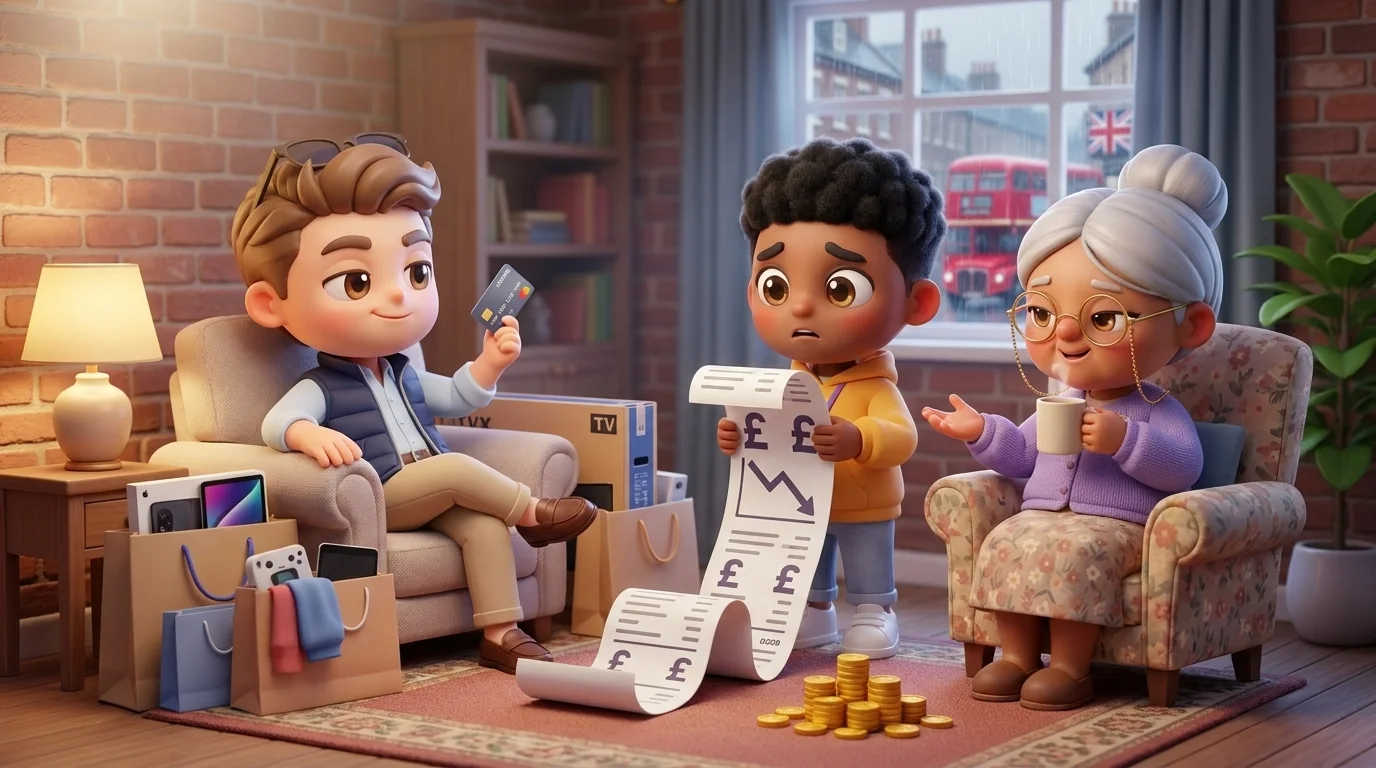
Good Debt vs Bad Debt
Student loans, mortgages, business loans vs BNPL: what debt really costs.
Play lesson 1 freeStudent loans, mortgages and business loans versus BNPL and payday loans. Learn how to judge what a debt really costs you and when borrowing makes sense.
Debt leans good when it buys something that grows in value or raises income, the repayments survive a bad month, and you know the total cost. Your one action: write the three questions in your phone notes for the next time you're offered credit.
APR compares loans; the total amount payable is what it really costs you. Longer terms lower the monthly payment but usually raise the total. Your one action: for any loan or finance quote, multiply the monthly payment by the number of months before you sign.
Every monthly payment has an invisible price tag: what that money could have done instead. Your one action: pick one regular payment and write down what the same amount would build in a year if you saved it.
In England, student loan repayments are a share of income above a threshold, not of what you owe, and the rest is written off after 30 or 40 years. Your one action: find your loan plan and threshold, then check the student loan line on your next payslip.
A repayment mortgage clears the loan over time; interest-only doesn't. Deposit size sets your LTV, and fixed deals end, so payments can change. Your one action: if you ever get a quote, check the total amount payable and what the payment would be if rates rose by 2 points.
A business loan is good debt only if the asset's profit covers the repayments in bad months too, and you understand guarantees. Your one action: for any business idea, write the repayment next to the worst-month profit and see which is bigger.
Consumer debt buys things that lose value, often at high rates, so you pay long after the fun's over. Your one action: for your next big want, set up a savings pot and save for it instead of financing it.
BNPL is debt, now regulated by the FCA, and plans stack up fast across apps. Your one action: list every BNPL plan you have, add up what leaves your account each month, and put the dates in your calendar.
Good debt goes bad when it's too big, the rate rises beyond what you can pay, or it funds the wrong thing. Your one action: for any debt you have, work out what the payment would be if the rate went up 2 points.
Pay priority debts first (home, council tax, energy, fines, child maintenance), then the highest rate debt, and get free advice early. Your one action: list your debts with their rates, mark the priority ones, and if it feels too much, contact StepChange or National Debtline.
Leverage magnifies losses as well as gains; good debt is affordable, fully costed and funds something that earns or lasts. Your one action: for each debt you have, write what it bought, its APR and its total cost, and tackle the most expensive one first.
 Free with a code
Good Debt vs Bad Debt: quick answers
Which question matters MOST before taking on any debt?
Will the monthly payment still fit if my income drops for a while?. That's the affordability test. Good debt that you can't repay in a bad month stops being good.
Good Debt vs Bad Debt: in-depth guides
Related topics
- BorrowingOverdrafts, BNPL, cards and loans: the real cost.
- Student FinanceLoans, instalments, bursaries — decoded.
- Debt & Getting HelpPriority debts, and who to call (for free).
Browse the whole money library or play the free money games.